July 25, 2026
Piles, also called hemorrhoids, affect millions of people every year. Although they are common, many people are unaware of what actually causes them. Understanding What Causes Piles can help you take preventive steps and seek treatment before symptoms become severe.
At Shastram Piles and Fissure Clinic, experienced specialists provide advanced diagnosis and treatment for piles, fissures, and fistulas using modern techniques. If you notice early symptoms, consulting an experienced Piles Doctor in Noida can help prevent complications.
What Are Piles?
Piles are swollen and inflamed veins in the rectum or around the anus. They develop when excessive pressure is placed on these veins over time.
Piles may be:
- Internal piles
- External piles
- Prolapsed piles
- Thrombosed piles
Early diagnosis leads to better treatment outcomes.
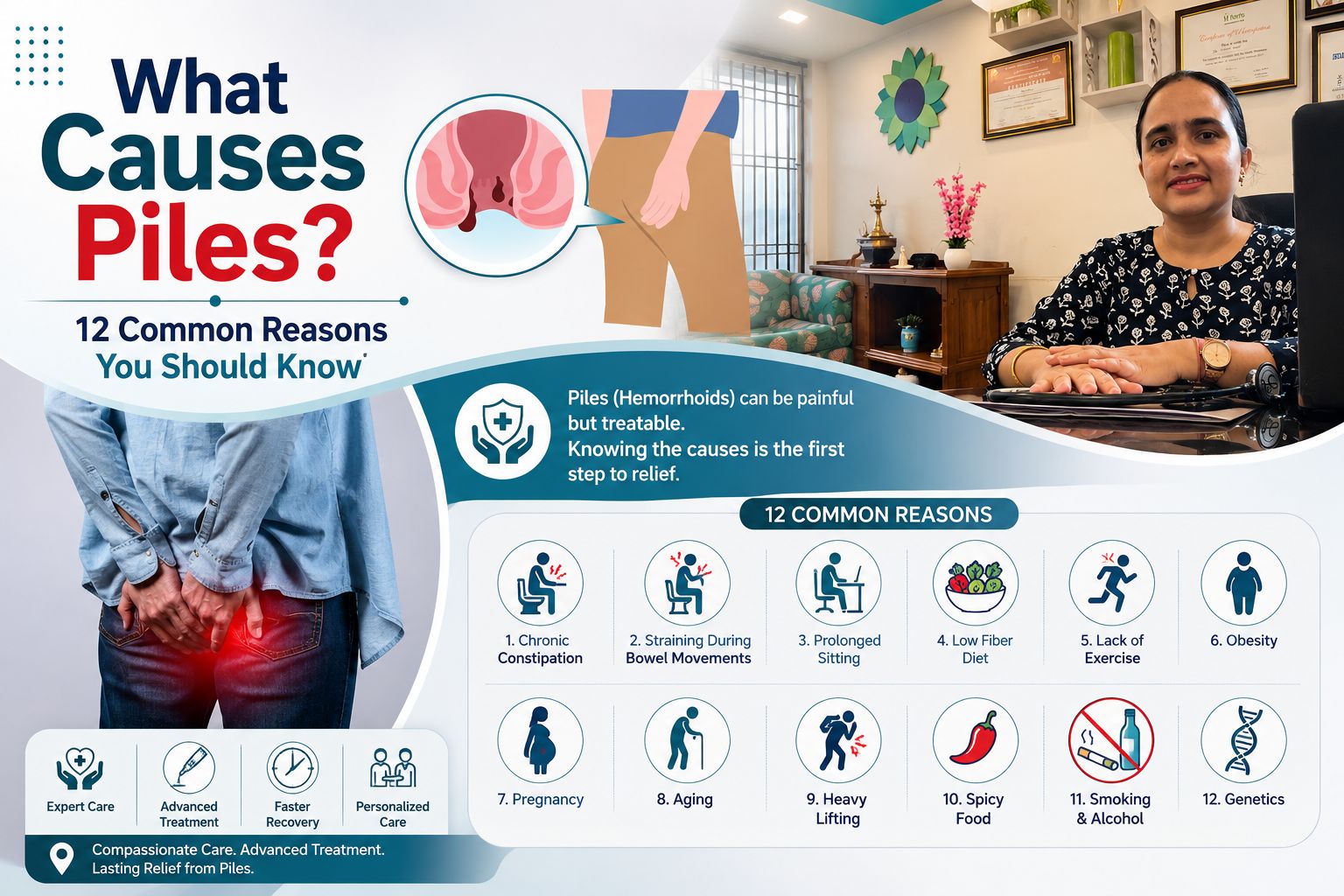
12 Common Causes of Piles
1. Chronic Constipation
Repeated straining during bowel movements increases pressure on the veins in the rectum.
2. Low-Fiber Diet
A diet lacking fruits, vegetables, and whole grains can make stools harder and increase the risk of constipation.
3. Sitting for Long Hours
People with desk jobs or those who sit for extended periods may have a higher chance of developing piles.
4. Pregnancy
During pregnancy, increased abdominal pressure and hormonal changes can contribute to piles.
5. Obesity
Excess body weight places additional pressure on the pelvic and rectal veins.
6. Heavy Weight Lifting
Frequently lifting heavy objects without proper technique can strain the lower rectum.
7. Chronic Diarrhea
Frequent bowel movements may also irritate the anal region and contribute to hemorrhoids.
8. Aging
As people age, the tissues supporting the rectal veins become weaker, increasing the risk of piles.
9. Family History
Some individuals may have a genetic predisposition to developing hemorrhoids.
10. Lack of Physical Activity
A sedentary lifestyle slows digestion and increases the risk of constipation.
11. Delaying Bowel Movements
Ignoring the urge to pass stool can result in harder stools and excessive straining later.
12. Poor Hydration
Not drinking enough water contributes to constipation and increases pressure during bowel movements.
Early Symptoms of Piles
Common symptoms include:
- Bright red bleeding during bowel movements
- Itching around the anus
- Pain while passing stool
- Swelling near the anus
- A lump around the anal opening
- Mucus discharge
- Discomfort while sitting
If symptoms persist, consult a Piles Doctor in Noida for an evaluation.
How to Prevent Piles Naturally
Many cases can be prevented with healthy lifestyle habits.
Eat a High-Fiber Diet
Include vegetables, fruits, legumes, and whole grains in your meals.
Drink Plenty of Water
Aim to stay well hydrated throughout the day to keep stools soft.
Exercise Regularly
Walking, stretching, and other forms of regular exercise support healthy digestion.
Avoid Straining
Do not spend excessive time on the toilet or strain during bowel movements.
Maintain a Healthy Weight
Weight management reduces pressure on the rectal veins.
These habits are effective ways to How to Prevent Piles Naturally and improve overall digestive health.
When Should You Visit a Doctor?
Seek medical advice if you experience:
- Persistent rectal bleeding
- Severe pain
- Recurrent piles
- Swelling that does not improve
- Difficulty passing stool
- Symptoms lasting more than a few days
Timely diagnosis can prevent complications and improve treatment outcomes.
Treatment Options
Depending on the severity of your condition, treatment may include:
- Lifestyle modifications
- Medications
- Dietary counseling
- Laser piles treatment
- Minimally invasive procedures
- Follow-up care
Your doctor will recommend the most appropriate option after a thorough examination.
Why Choose Shastram Piles and Fissure Clinic?
Patients choose the clinic because of:
- Experienced proctologists
- Advanced laser technology
- Personalized treatment plans
- Modern diagnostic facilities
- Comfortable patient care
- Comprehensive follow-up support
Book Your Consultation Today
 Call: +91-9289359859
 Address: Ayur Hridayam, BR-91, Sector 116, Noida – 201305
GMB: Visit Our Clinic
Conclusion
Knowing What Causes Piles is the first step toward prevention and better digestive health. Simple lifestyle changes can reduce your risk, but persistent symptoms should never be ignored. If you are experiencing discomfort, bleeding, or swelling, consult an experienced Piles Doctor in Noida at Shastram Piles and Fissure Clinic for expert evaluation and advanced treatment.
FAQs
Q1. What is the most common cause of piles?
Chronic constipation and straining during bowel movements are among the most common causes.
Q2. Can piles go away on their own?
Mild cases may improve with dietary changes and healthy habits, but persistent symptoms require medical evaluation.
Q3. Does sitting too long cause piles?
Prolonged sitting can increase pressure around the rectal area and contribute to hemorrhoids.
Q4. How can I prevent piles naturally?
Eating a fiber-rich diet, drinking enough water, exercising regularly, and avoiding straining can significantly reduce your risk.
Q5. When should I see a piles specialist?
If you experience ongoing bleeding, pain, swelling, or recurrent symptoms, schedule an appointment with a qualified specialist as soon as possible.
Latest Posts
- Why Do Piles Bleed? Causes, Symptoms & When to See a Piles Doctor in Noida
- Hemorrhoids Fissure Fistula Clinic in Noida: Specialized Care for Common Anorectal Problems
- Female Doctor for Anal Problems in Noida: When Should You Consult a Specialist?
- Doctor for Anal Problems in Noida: When Should You Consult an Anorectal Specialist?
- Best Doctor for Piles and Fissure in Noida: How to Choose the Right Specialist
- Best Proctology Clinic in Noida: Complete Care for Piles, Fissures & Fistulas
Latest Category
- Ayurveda (13)
- Piles Clinic (78)